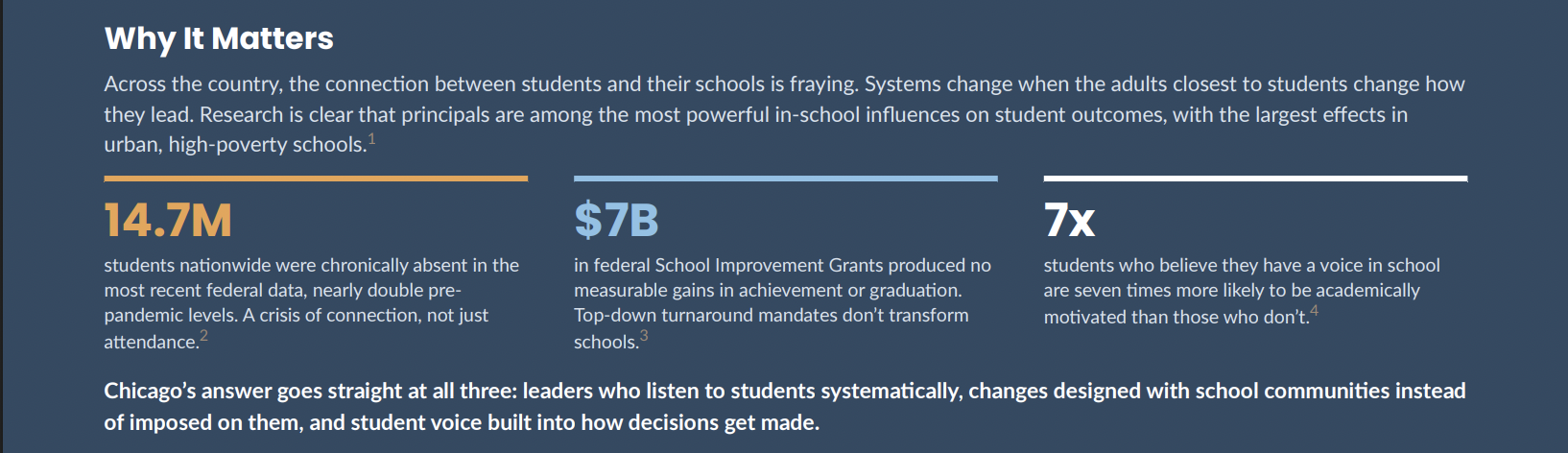
In one of the nation’s largest school systems, Chicago Public Schools leaders are partnering with the National Equity Project to redesign how schools work, grounding in the question: what are students actually experiencing? The results are visible at every level of the system.
What Systems Change Looks Like in Chicago
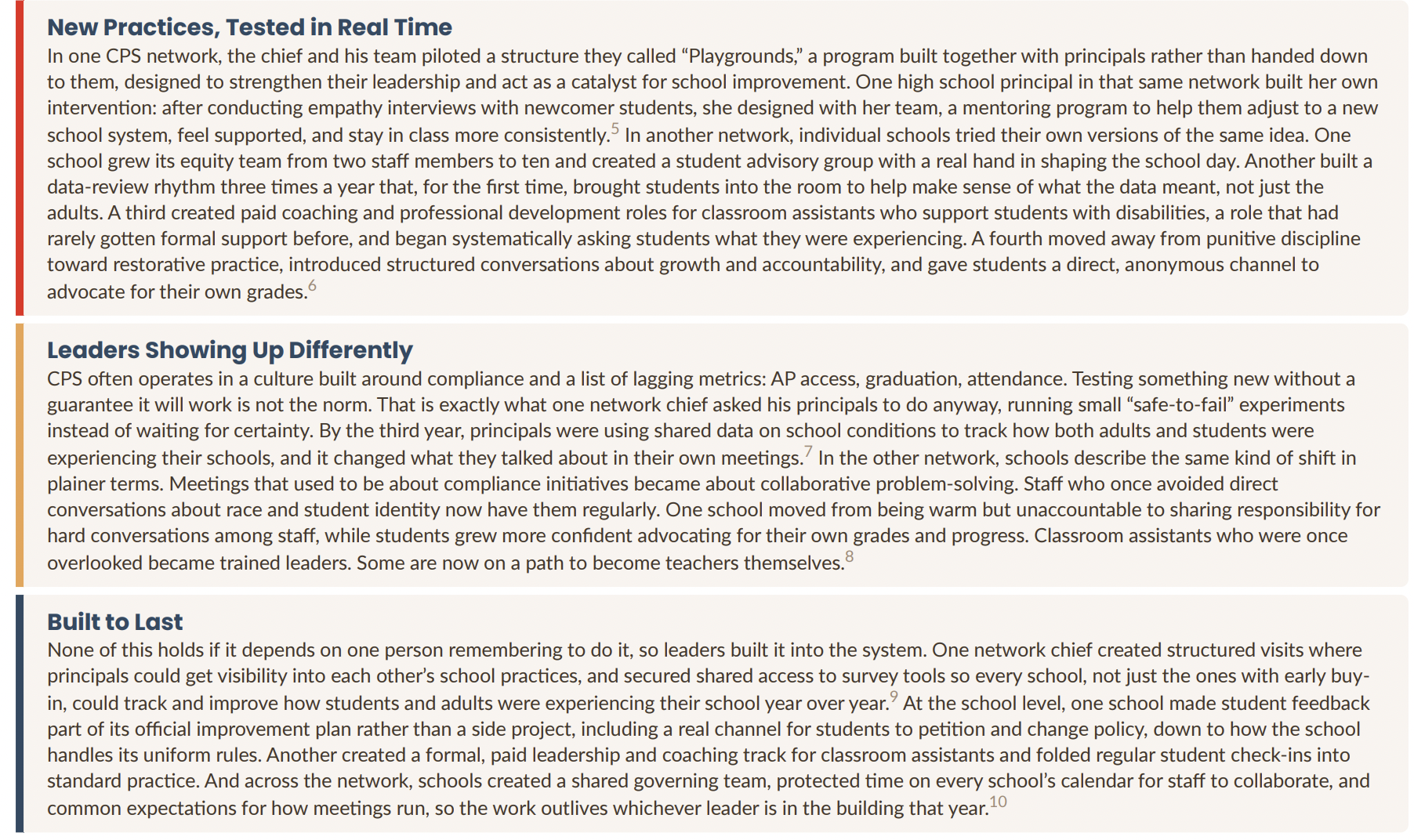
National Equity Project measures whether change is real by looking for three things: are new practices actually being tried, are people leading and relating to each other differently, and are those shifts becoming part of how the system operates rather than a one-time project. Here is what each looks like inside a few focal Chicago’s schools.
The Results
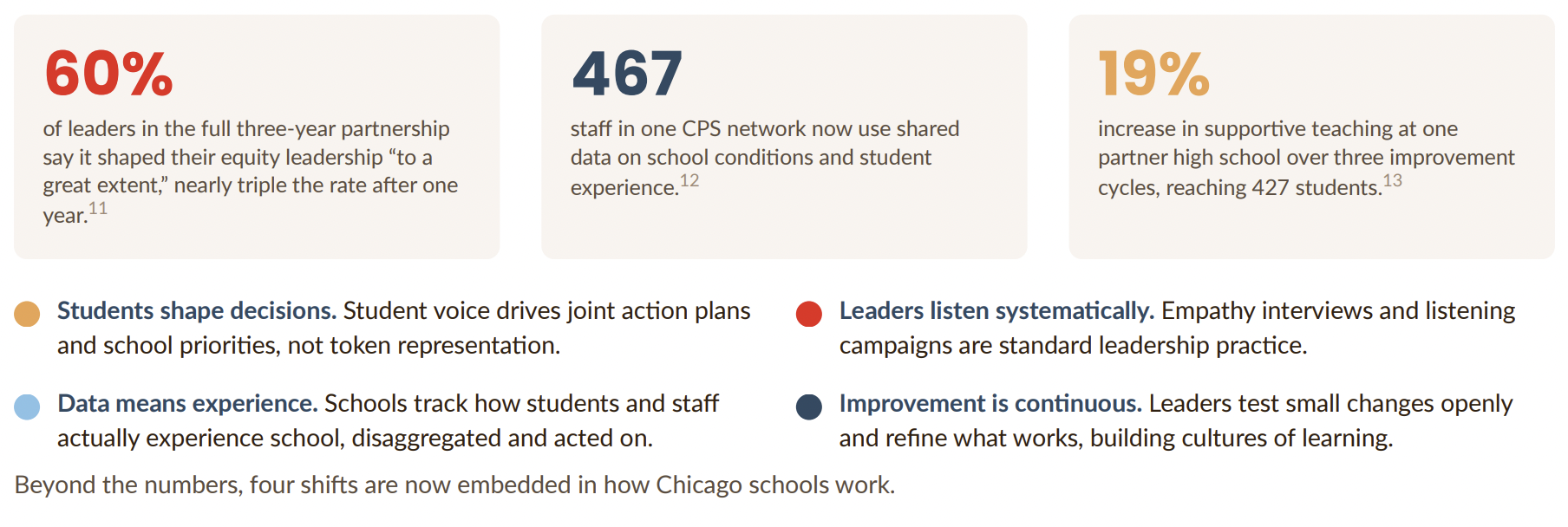
Three years of data tell a consistent story: Chicago leaders are growing, conditions are improving, and the gains compound with time.
One elementary principal launched a school-wide listening campaign to hear directly from students and used what she learned to strengthen teaching and school culture. A school-wide theme now rallies staff around a shared goal: center students and meet their goals.
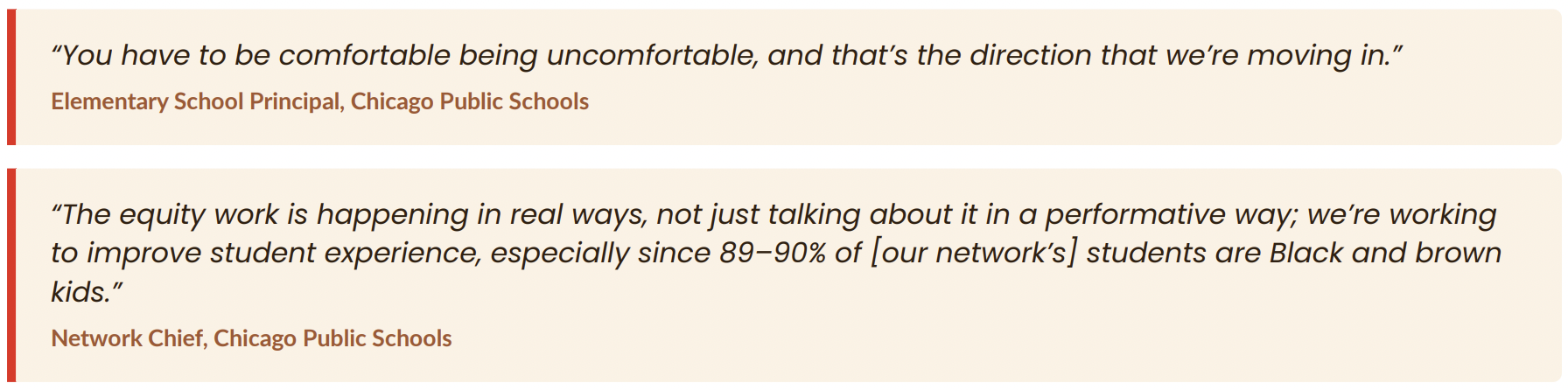
Another network chief models the collaborative leadership he wants to see by engaging principals in cycles of inquiry, co-designing professional learning with them, and listening to students across his network. His principals have followed suit, building schools where student needs come first.
What’s Next
CPS networks have built this work to last using collaborative peer-learning structures, ongoing improvement cycles, and campus-bycampus goals that continue beyond any single initiative. The partnership between CPS and the National Equity Project is part of NEP’s 10-year aim to transform educational experiences and outcomes for 5 million young people, and Chicago is helping lead the way.
S O U R C E S
1. Grissom, Egalite & Lindsay, How Principals Affect Students and Schools (The Wallace Foundation, 2021), wallacefoundation.org. 2. U.S. Dept. of Education data, 2021–22, via Attendance Works, attendanceworks.org. 3. U.S. Dept. of Education, IES, School Improvement Grants: Implementation and Effectiveness (Mathematica, 2017), ies.ed.gov. 4. Quaglia Institute, School Voice Report, quagliainstitute.org. 5, 7, 9. Internal: NEP Goal 10 Systems Change Reflections, District Redesign Network 1.0 (CPS Network 15 entries). 6, 8, 10. Internal: NEP Goal 10 Systems Change Reflections, District Redesign Network 1.0 (CPS Network 7 school-level entries). 11. Internal: NEP Leading for Equity (LFE) Self-Assessment, Spring 2026 respondents. 12. Internal: NEP District Redesign Network Stone Stories and Catalyze survey administration records, CPS partner network. 13. Internal: Elevate student experience survey data, NEP DRN records