
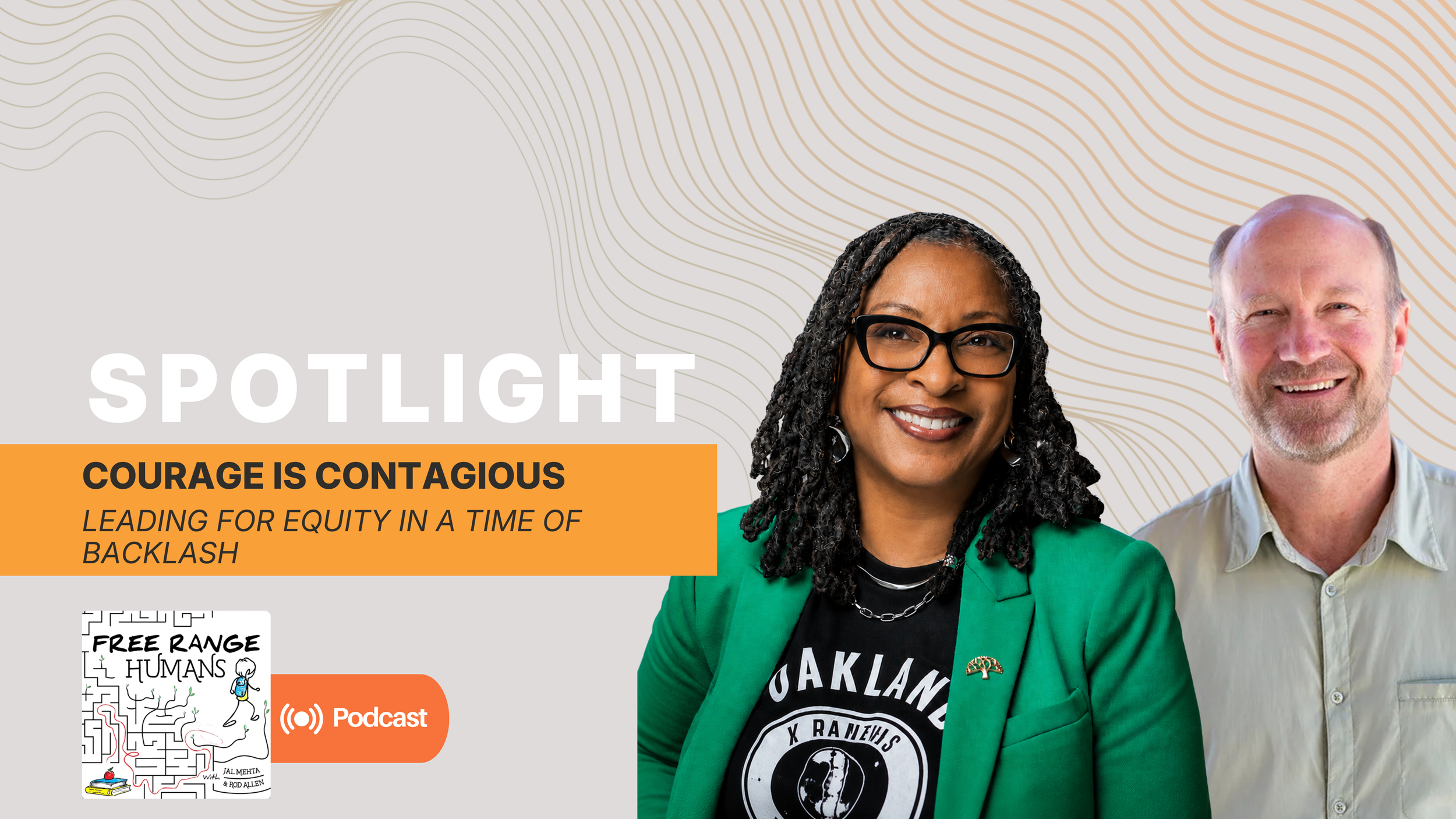
Reflections from the Field with LaShawn Routé Chatmon and Tom Malarkey
In a political and educational climate increasingly dominated by noise, polarization, and technical quick-fixes, what does it actually take to lead for equity?
In a recent episode of the Free Range Humans podcast, National Equity Project President & CEO LaShawn Routé Chatmon and Director of Strategic Consulting Tom Malarkey sat down with Harvard University’s Professor of Educational Leadership Jal Mehta and Deeper Learning Institute Senior Advisor Rod Allen on the Free Range Humans for an unarmored, wide-ranging conversation on the state of public education, the power of civic spaces, and the daily discipline required to transform systems from the inside out.
Rather than offering sanitized education buzzwords or surface-level compliance checklists, LaShawn and Tom grounded the discussion in a fundamental truth: Orchestrating change in our schools and institutions is a profoundly human endeavor; one that begins with internal reckoning, travels by relational trust and is brought to life by collective vision and liberatory design.
Key Insights from the Conversation
Public Education as a Sacred Civic Space: Public education remains one of the last truly shared civic spaces in our society, a vital ground where solidarity across lines of difference can still be actively built, defended, and nurtured.
Listening as an Act of Equity: Real, intentional listening is not a passive activity or an episodic focus group tool; it is one of the most disruptive and strategic instruments a leader possesses to uncover what a community cares about and what barriers are in the way.
Moving Beyond Armor to Shared Purpose: Despite external political friction, communities, families, and educators fundamentally share remarkably similar aspirations for their young people. Leading for equity requires us to shift from reactive crisis management, drop our professional armor and hero mentality, and together build learning futures that foster youth agency, belonging, community/civic participation and expands economic opportunity in the Age of AI.
“One of the things that I think helped us navigate that moment is we got close to our partners, and we started and we listened. We took a listening approach about what they needed from us in order to stay focused and committed to the work that they were doing on the ground. And I think their clarity, actually, I think strengthened our resolve. And so, you know, it's, it's been hard in all of the ways that you can imagine, but we've also been able to navigate it by staying close to our partners.” - LaShawn Routé Chatmon
“We clearly see the opportunity for a more powerful version of this work as we move through this time -- a bigger tent, sharper understandings, stronger alliances, and bridging.”- Tom Malarkey
Step Out of the Noise and Into the Practice
Whether you are navigating district strategic planning, leading school redesign cycles, or seeking to sustain your own leadership capacity under institutional strain, this episode offers a grounding reminder that we all have a role to play in shaping a humanizing future for our schools.
