
The Complex Reality of Reclaiming Our Agency
Every June, the American education system enters what we at the National Equity Project call the "frantic finish." It is an institutional habit, a collective, unspoken agreement that the only way to close out a school year is to push ourselves and our staff to the absolute brink of exhaustion. We treat survival as a prerequisite for leadership.
But this June felt different. The landscape shifting beneath our PK-12 educators isn't just changing; it is dynamically unpredictable. The toll of navigating deep, systemic uncertainty while holding the line for educational equity has left many leaders operating from a place of deep skepticism and structural fatigue.
Last month, we invited our network into a different kind of space. We hosted a 90-minute virtual convening: Owning Your Agency in Unpredictable Times. We didn’t gather to deliver a canned presentation on strategic planning or generic compliance metrics. We gathered to co-create humanizing conditions to build a space of genuine belonging where leaders could drop their armor, be seen, and collectively breathe.
Listening to the Room
When we closed our time together, we asked our participants a plain question: What are you taking from today to own your agency? We didn’t receive corporate answers about "productivity" or "efficiency." Instead, an overwhelming majority of the leaders in the room anchored on three essential, relational truths:
Being in community is critical.
We must slow down to sustain ourselves.
We must commit to actions that allow us to release, heal, and restore.
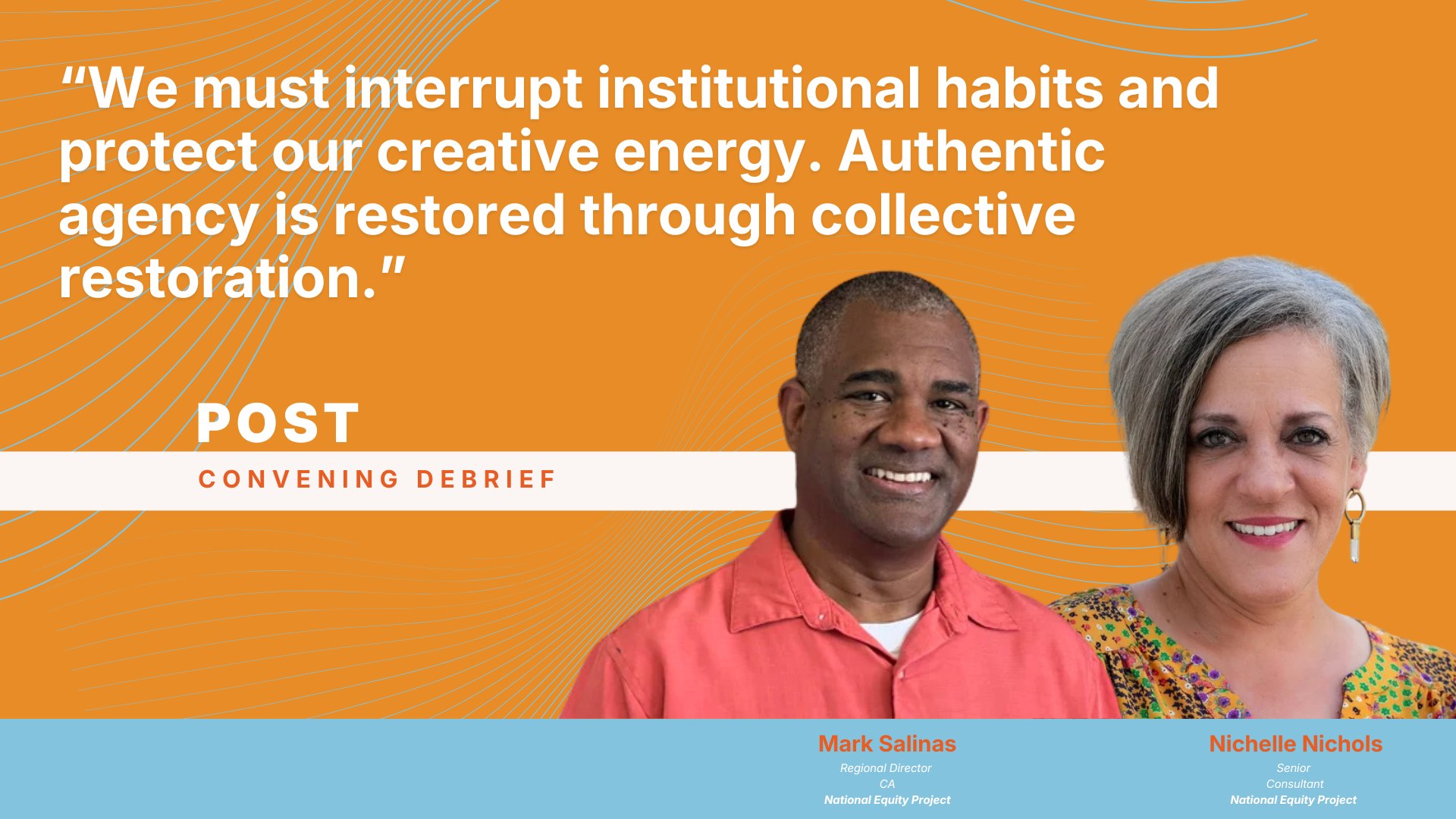
When our hosts, Nichelle Nichols and Mark Salinas, sat down to debrief the convening, they looked past the standard engagement metrics. They looked at the deeper systemic realities the data revealed.
When polled on which of our "4 Keys" framework resonated most right now, the responses were a courageous refusal of institutional exhaustion. The top choices weren't passive. Thirty-eight percent of leaders identified Protecting Our Energy as their critical point of agency, intimately understanding that we cannot design new architectures for learning from an empty vessel. Another 34% chose Setting Boundaries and Embracing Loving Anger.
As Mark noted during their debrief, we rarely give educators permission to be angry. But anger at injustice, when rooted in deep love for our children and communities, is a clarifying force. It is the fuel required to erect fierce boundaries around our spirits and our schools.
Moving From Survival to Authorship
True agency is not an individual burden. It cannot be bought with a wellness app or fixed with a superficial checklist as we head into the summer. True agency is a practice of shared power. It is nurtured through relational trust and interdependence—the layering of deep, trusting relationships across roles, identities, and systems so that no one is left navigating the complexity alone.
If we want to move our schools beyond episodic "input" and into true youth and community co-authorship, we have to model those exact enabling conditions for ourselves. We cannot build just futures using exhausted tools.
Rejuvenation is emergent, and it is often uncomfortable. It requires us to resist the urge to be "the fixer" and instead hold space for the messy, emotional reality of real healing.
As a national network, our charge this summer is to actively interrupt the habit of pushing through. We reclaim our collective power not by working faster, but by slowing down enough to remember who we are, why we are here, and who we stand in solidarity with.
