
The Long Beach Unified School District—one of California's largest school systems, serving nearly 62,000 students--has been engaged in a years-long journey towards greater equity and innovation. Known as a high-functioning district with a strong culture and educator commitment, it has been clear to district educators and community members that it nevertheless had further to go. Significant inequities for students have persisted, and some adult ways of working were being recognized as obstacles to deeper transformation.
NEP resources, and more recently direct NEP support, have helped LBUSD catalyze more transformative change on this journey.
In 2022-23, the district embarked on a yearlong engagement and visioning process that resulted in Vision 2035, an ambitious long-range plan that included not just a graduate portrait, but also an adult portrait and a system portrait. Facilitated by Prospect Studio, the equity-centered process was anchored in Liberatory Design, a core part of NEP’s approach and Leading for Equity Framework. "The visioning process,” says Superintendent Dr. Jill Baker, “was completely different than any vision work that had been done in our district previously. It was a very community-driven vision-building experience."
Even before that, the district had been using NEP resources to inform its early equity learning and work. Frameworks like the Lens of Systemic Oppression helped leaders more clearly see the causes of the inequitable patterns of outcomes and experiences for both students and adults - and to start “shifting the discourse” within the system. (See Excellence and Equity for more on the district’s equity journey.)
One of the early proponents of Liberatory Design was Dr. Nader Twal, a central office administrator in LBUSD and a passionate leader for equity. He’d learned about Liberatory Design several years earlier and brought it into the district.
How Research Became a Relationship
Why do we keep treating schools as the unit of change, when we keep describing systems as the challenge? And what about systems leaders' ways of working need to shift in order to catalyze deeper systems change?
These were the questions that drove Dr. Twal’s doctoral dissertation in 2021. "The image I use is a rose growing out of concrete," Twal explains, describing how individual examples of student success belie the systemic conditions. "We keep looking for those lighthouses, those roses, thriving in adverse environments and resourcing them to death to say, 'See, it's possible.' My fundamental question was, if you're trying to grow roses, why do it in concrete?” he continues. “How might we create the soil that causes all flowers to bloom?"
Dr. Twal’s dissertation research led to a connection with NEP leaders Tom Malarkey and Victor Cary, two of Liberatory Design’s co-creators, and over time a more formalized partnership emerged between NEP and the Long Beach system.
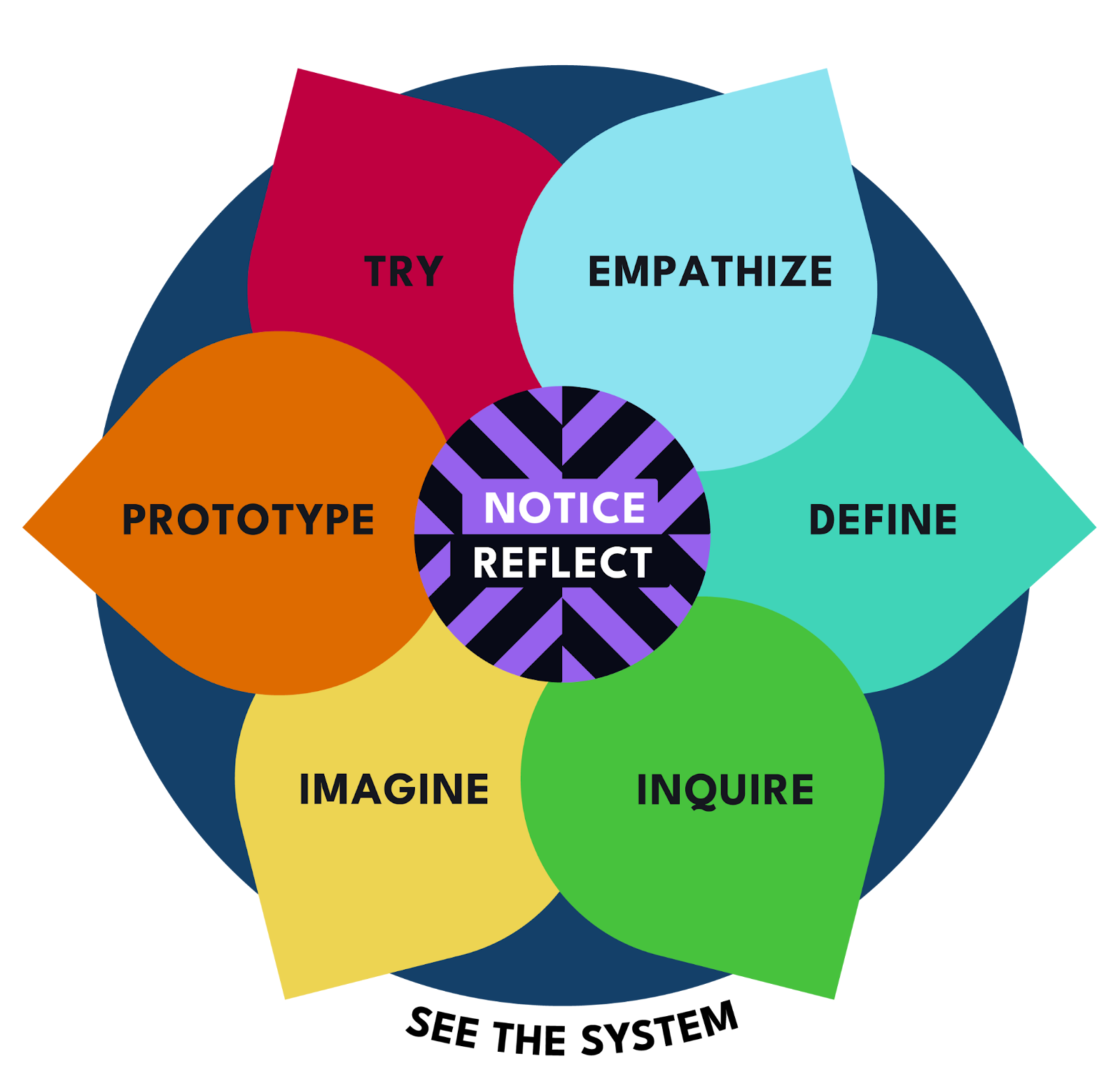
Twal believed the Mindsets and Modes of Liberatory Design held the key that could help build system capacity for more transformative change —the kinds of change that the Vision 2035 portraits would require.
Superintendent Baker and the district leadership team agreed, and in 2023 supported Twal to design and lead a District Leaders Learning Community with 70 central office leaders using Liberatory Design to “build our collective liberatory consciousness and transformative leadership capacity” over the next two years.
This effort has created a wider circle of “pollinators” who have been seeding Liberatory Design-informed change efforts across the district, helping “break up the concrete” in the system.
Students as System Designers
One expression of how Liberatory Design is pollinating in the district is Raising Student Voice and Participation (RSVP), a superintendent-led student advisory that goes far beyond traditional student councils. Facilitated by Dr. Baker and Dr. Twal, the initiative invites each of the district's high schools to send 3-6 student ambassadors to RSVP to learn Liberatory Design, then partner with administrators and teachers at their schools to address real equity challenges drawn from data.
"Rather than have students work on a project outside of what was actually happening at their school, my belief is in student-adult partnership," Dr. Baker says. "So we created the space for adults and students to be working on equity dilemmas together." Each school site identifies an equity dilemma based on academic data or climate surveys, challenges like building belonging among Latino and Black students or addressing cultural awareness gaps. Students then partner with administrators to study the problem from a student perspective.
"It's really about partnering with the adults at our schools to deal with these problems that they've already identified and been dealing with for a long time, but they want a student perspective on," one student ambassador explained. Then students don't just present findings to each other. They also present at faculty meetings, requesting adult practice shifts based on student research.
Last spring, Teodor, a Polytechnic HS student, shared his RSVP team’s work with district and school leaders. Teodor and his peers analyzed math data and used the liberatory design process to humanize the data, including interviewing students. The results of their study found them making recommendations about teaching practices in Math instruction with their teachers and school administrators.
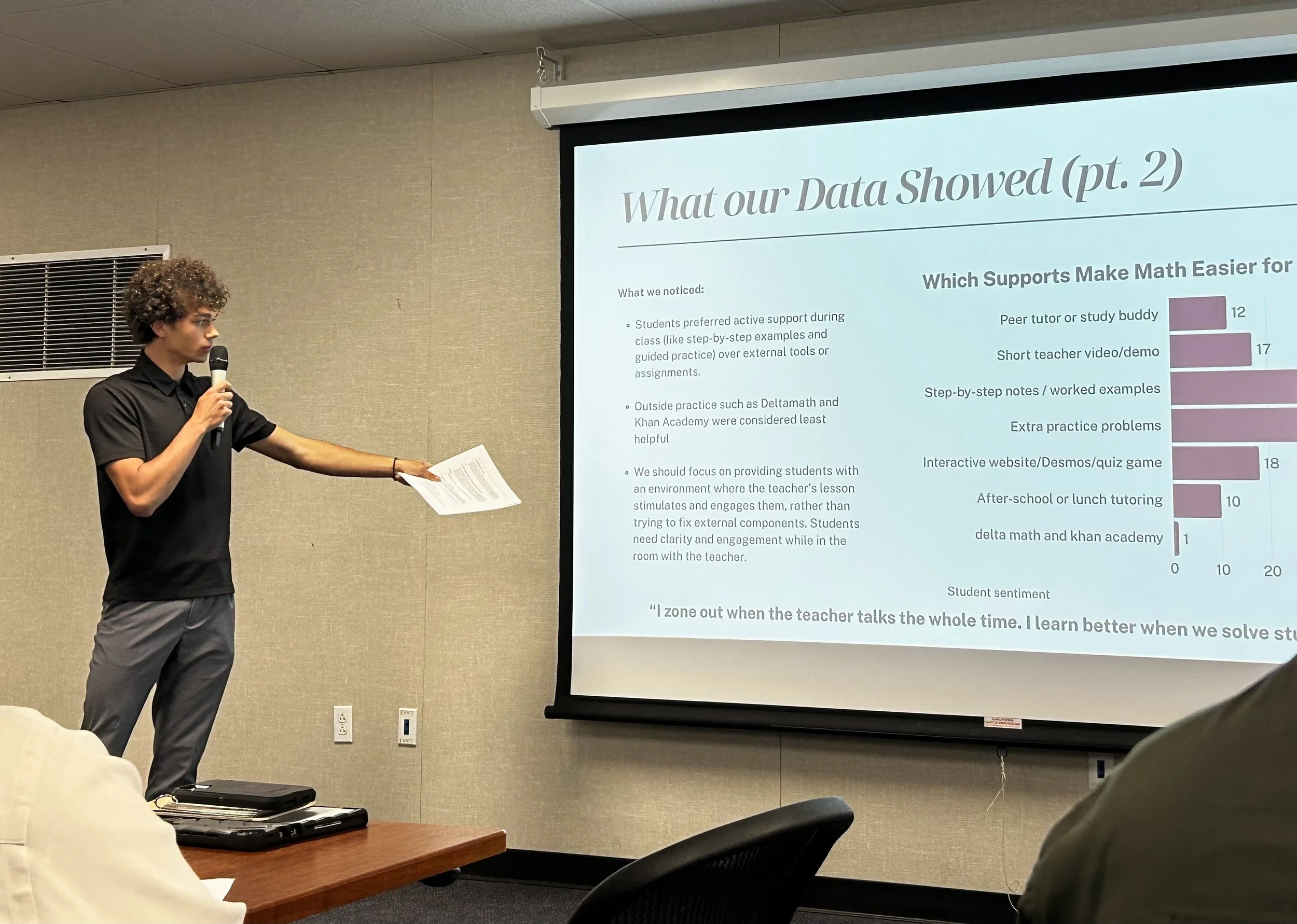
Teodor sharing his team’s work with district administrators
This winter, a group of RSVP student advisors from Millikan HS launched a peer mentoring program, Ram Bridge, as a result of their liberatory design experience last year. The peer mentoring program pairs night graders who have been identified as rating their sense of belonging at school lower than average, with a Junior or Senior, who can cultivate relationships and explore ways for ensuring that students become more school-connected.
Although the most powerful shift may be within students themselves. "I think it's empowering to have our voices heard and valued," one student reflected. "It just gives us all the confidence in the world to continue to inspire change." (For more, see this podcast episode with Dr. Baker and two RSVP students.)
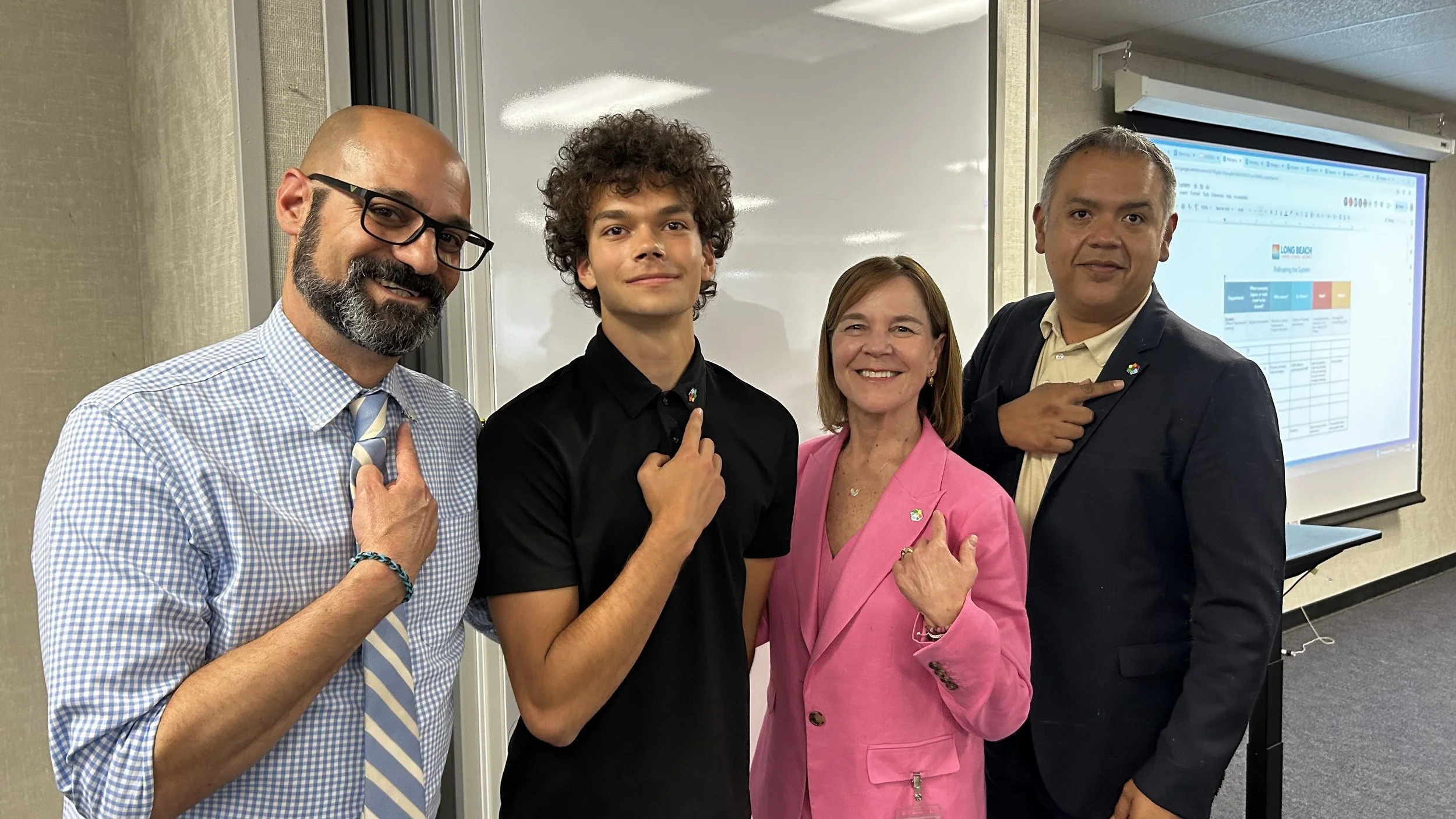
Dr. Nader Twal, Teodor (Polytechnic HS student), Superintendent Jill Baker, Dr. Alejandro Vega (Polytechnic HS Principal) with their Liberatory Design pins
Equity Leadership Where You Might Least Expect It
As LBUSD has deepened its work with both adults and students, and learned its way into new ways of being, bright spots and new ideas have continued to emerge, even in the unlikeliest of places.
Yumi Takahashi, Chief Business & Financial Officer, knew leaders in her department would play necessary roles in Vision 2035 work.
“The reach of business and operations staff in the District is tremendous…our embrace of equity-centered leadership was important if the Adult and System portraits were to become a reality for the system overall.” - Yumi Takahashi
Finance directors, transportation supervisors, purchasing managers, and nutrition services staff aren’t roles that typically appear in conversations about equity leadership, but in Long Beach, they've become integral to it. "Traditionally, leaders in business and operations in districts are typically the ones least likely to get access to equity leadership development in a district," says Malarkey. “LBUSD’s investment in capacity-building here is not just unusual, but strategic.”
Over the last year and a half, 30 business department leaders have worked with Tom Malarkey, Dr. Roxanne Kymaani, and Mark Salinas, learning NEP’s Leading for Equity Framework and Liberatory Design and building their equity leadership capacity.
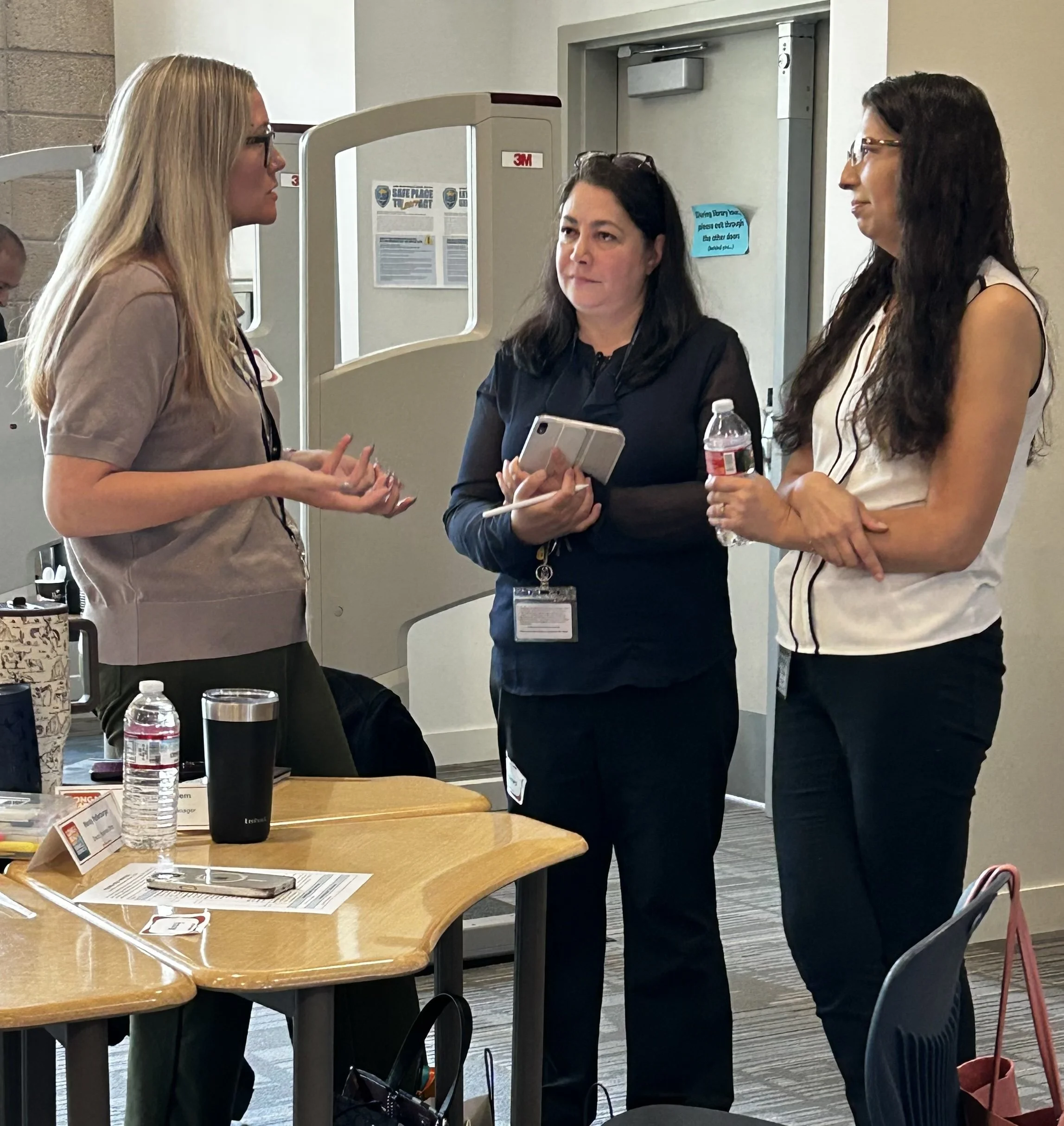
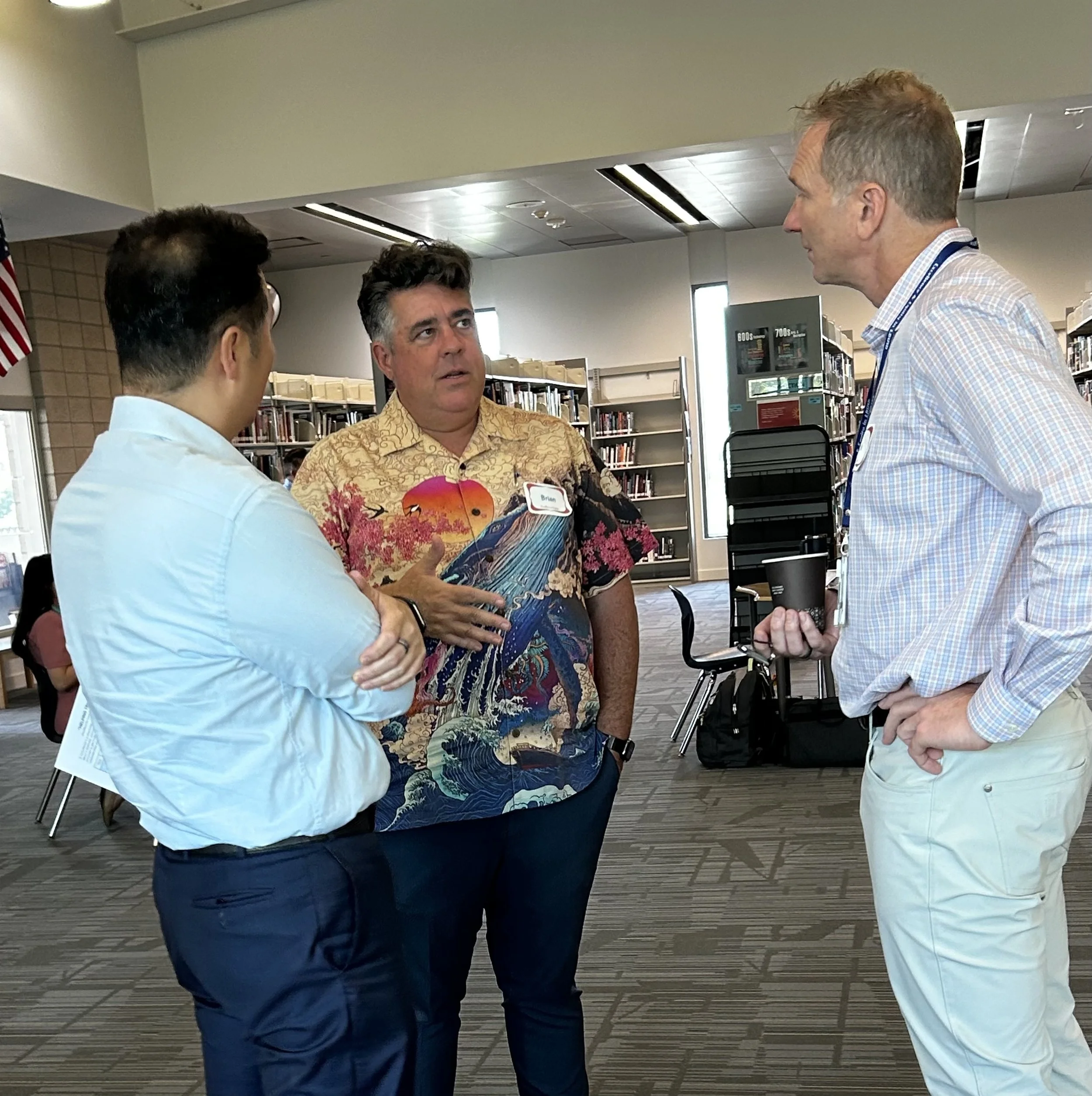
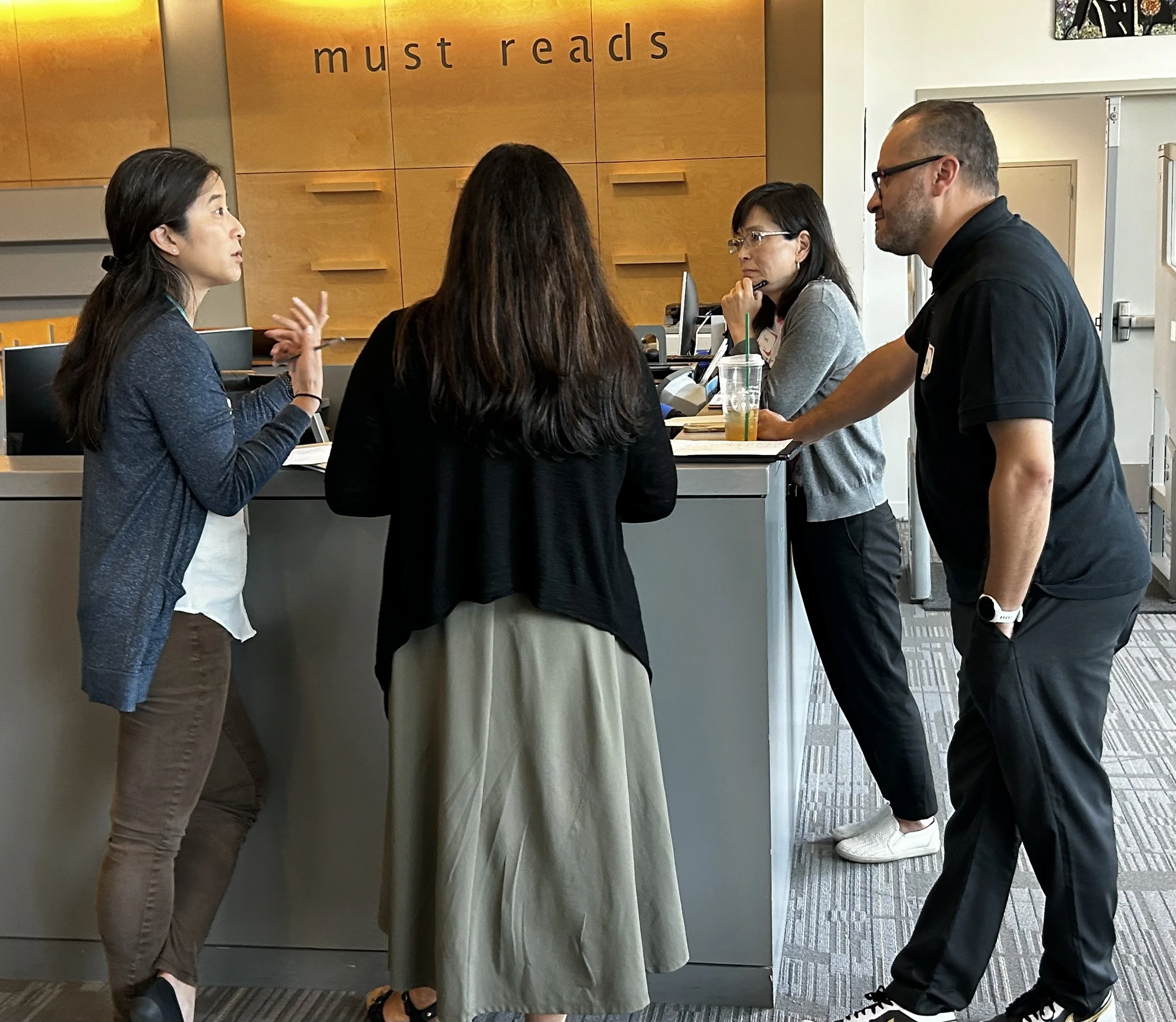
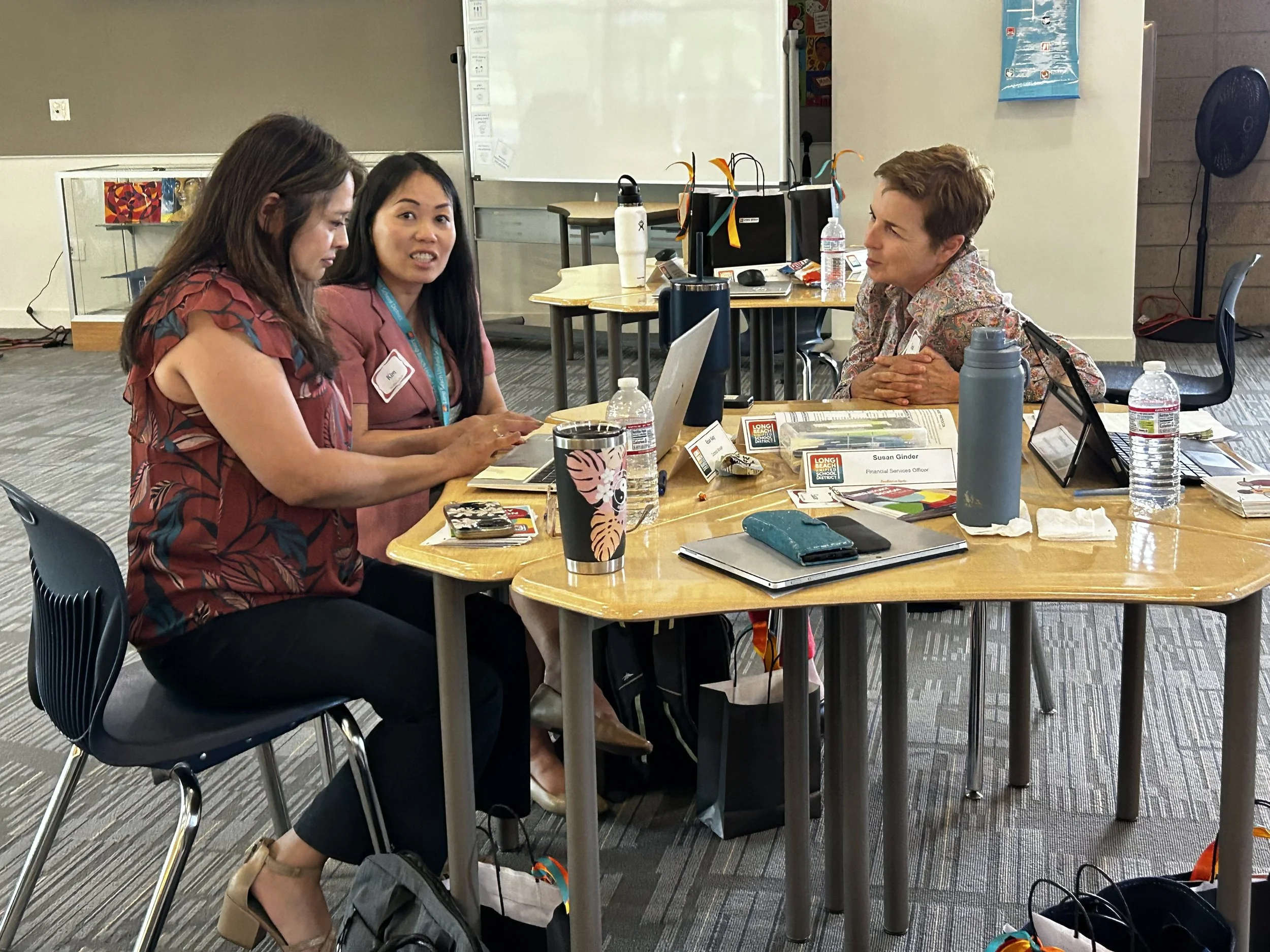
Business Department leaders have learned to use an Equity lens to see and engage challenges in their different department contexts. For instance, Facilities Department leaders have named how gendered norms in the construction industry create particular challenges for female leaders in the department.
Classified staff, who are more racially diverse than the district's certificated teaching staff, have found space to name challenging experiences they’d previously been unable to voice. Leaders of color and female leaders have been able to surface what it has meant to navigate a system that was not designed with them in mind, and to begin building the capacity to change it. "To have them be able to really think about how their identity shows up in their leadership and to surface issues that they have faced, e.g. as a Latino leader, having been in oppressive conversations and not being able to say anything," Dr. Baker reflects. "I think all of those are what I believe is going to contribute to exponential growth."
And given business and operations work is often highly technical, and these departments tend to be more hierarchically organized, NEP’s Complexity lens has been particularly important in building their capacity to lead more complex and ambitious change efforts. They’ve worked to engage others in their departments and those they serve in order to better understand challenges, seek input to the design of solutions, and try “safe-to-fail” actions that enable learning and adaptive ways of working. Says Malarkey, “It’s not that technical ways of working are wrong, but alone they’re not appropriate or effective when challenges are more complex, the human factors are critical, and the answers aren’t clear. So leaders need to expand their repertoire of approaches.”
Business leaders have been using Liberatory Design to rethink something as fundamental as improvement goal-setting—approaching it not as a compliance exercise, but as an opportunity to disrupt traditional ways of leading and center those most impacted by their decisions. "Goal setting has a whole system attached to it," Dr. Baker explains. "It can either perpetuate white dominant culture or it can disrupt that and bring in the framework in the way that NEP has supported our business leaders."
“Through our collaboration with NEP we’ve developed a community of practice that encourages reflection, mutual support, and movement towards an expanded model of leadership. Now, we’re embarking on the design challenge of how to deepen this work while simultaneously broadening its reach to include more leaders and staff in the system.” – Yumi Takahashi
The Work Continues To Expand and Deepen
Liberatory Design, and the shifts in leadership practice it supports, continue to inform efforts across the system. Some examples include…
This year, the district’s new Center of Black Student Excellence is hosting Liberatory Design Labs for site and district office teams. Led by Dr. Pamela Lovett and Nader Twal, the Lab incorporates Liberatory Design and the Black intellectual tradition as the basis for teams’ design work on equity challenges.
The district, as part of the CORE Schools network and supported by NEP, has committed to a 10-year effort to reimagine and redefine high school education aligned with the graduate, adult, and system portraits in Vision 2035. Liberatory Design is providing a shared process and language for how a range of shorter-term innovation efforts can help catalyze longer-term changes.
The HR Department, supported by NEP, has been developing the equity leadership capacity of its managers, and is using Liberatory Design to create conditions and systems in the department aligned with elements of the Adult and System Portraits.
The School Safety Department in coordination with the Restorative Justice Office, has used elements of Liberatory Design to reimagine their response after a student infraction to reduce the number that lead to avoidable law enforcement intervention.
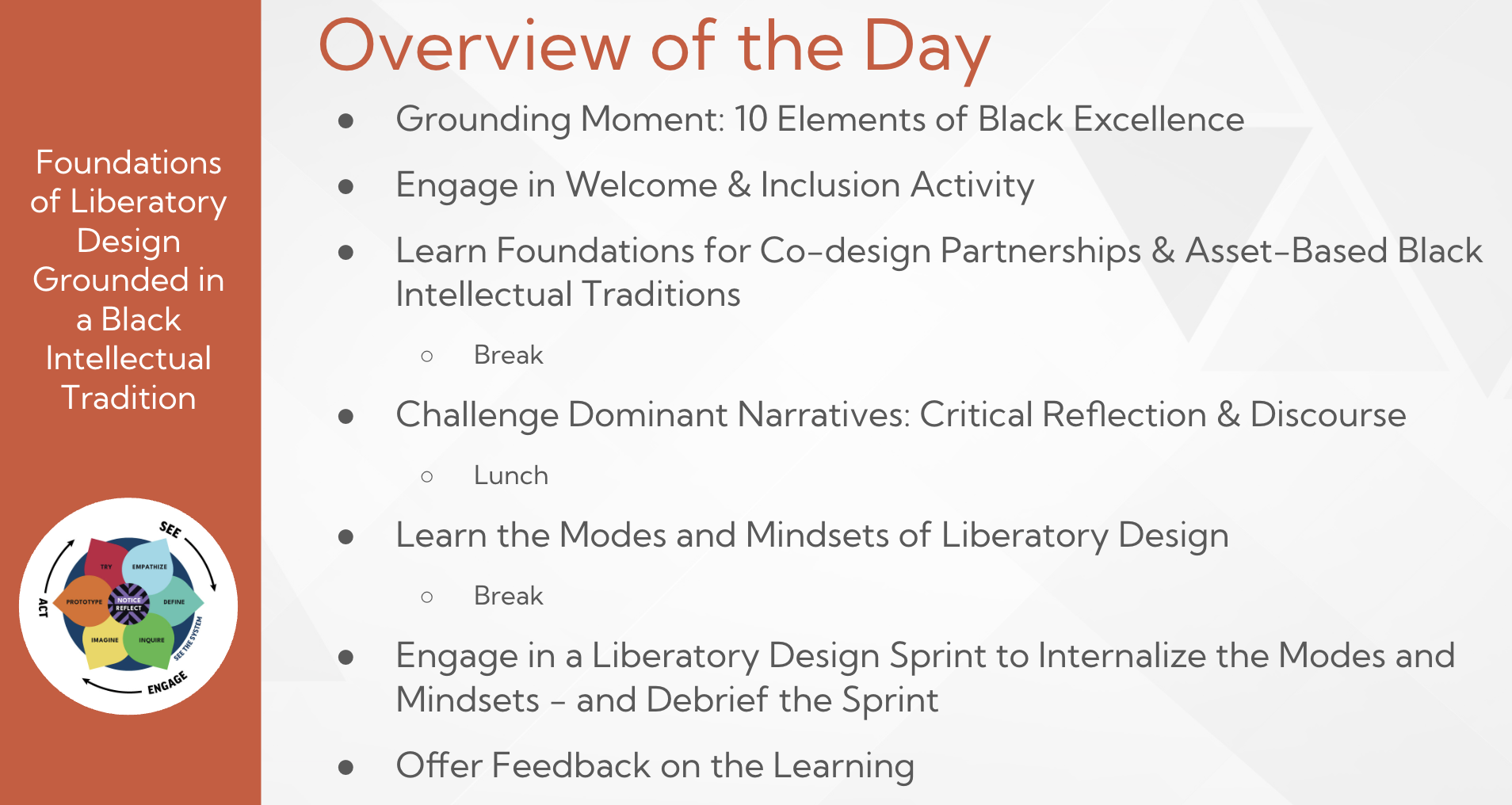
Agenda overview for a Liberatory Design Lab session
Despite this momentum, Dr. Baker stays focused on what still needs to happen. "We've got to keep going. Until our students 100% share with us that their experience in our district is what we want it to be, we can't overly celebrate,” she says frankly. “We can say there’s progress, and we've got a lot of work to do."
Dr. Twal echoes that urgency. "The biggest lie the world ever told students is that they are the future,” he says. “When someone tells you you're the future, you wait to matter. The reality is that you have agency and ability to affect change today." That belief that students don't have to wait, that systems can be redesigned, and that the soil can be changed—is what connects every strand of Long Beach’s use of Liberatory Design and its work with NEP.
For Long Beach, this is what it's looking like to crack open the concrete and to cultivate the soil beneath: creating conditions where students, educators, and staff don't just survive the system – they all bloom in it.
